
rail-pictures.com Linie rail-pictures.com
No registration required - login with Google, Facebook or X account! Hello guest, you are not logged in. Log in | Create account 
Forum   Contact   Legal notice
English German French Italian Spanish Polish Dutch japanisch Swedish 

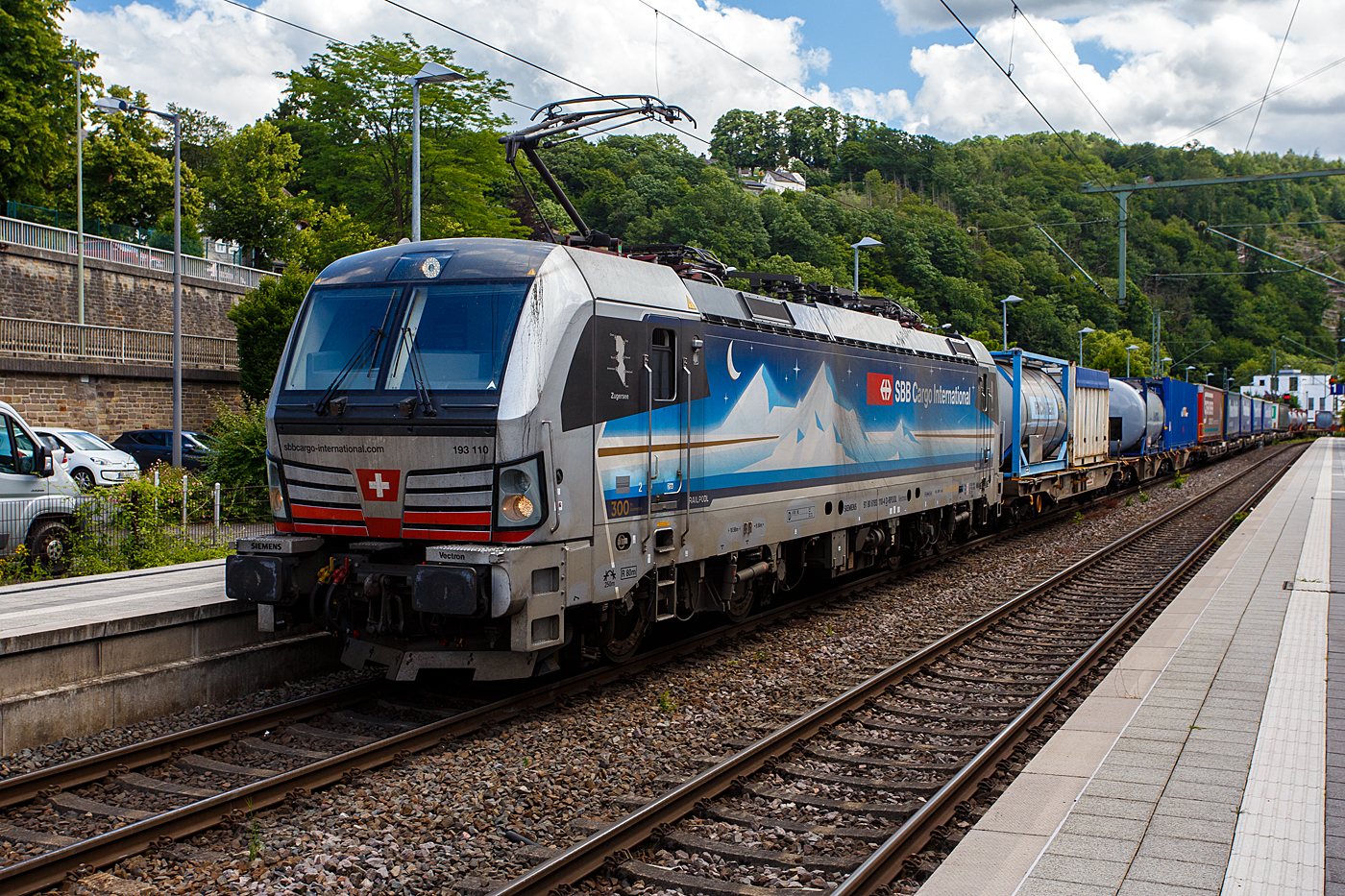
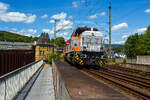
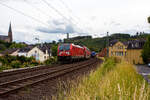
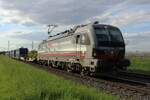
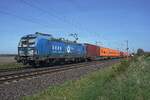
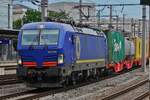
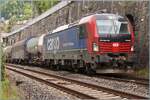
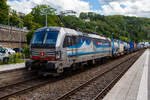
The Siemens Vectron MS - 193 110 "Zugersee" (91 80 6193 110-4 D-Rpool) of Railpool GmbH (Munich), leased to SBB Cargo International AG, is passing through Kirchen/Sieg station towards Siegen on June

(ID 58015)
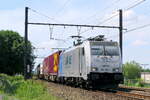

The Siemens Vectron MS - 193 110  Zugersee  (91 80 6193 110-4 D-Rpool) of Railpool GmbH (Munich), leased to SBB Cargo International AG, is passing through Kirchen/Sieg station towards Siegen on June 9, 2026, with a combined transport train operated by HUPAC.

The SIEMENS Vectron MS (X4E) was built in 2023 by Siemens Mobility in Munich-Allach under factory number 23293. The multisystem locomotive, designed with 6,400 kW, is executed in the A22 variant and thus has the approvals and corresponding country packages for Germany, Austria, Switzerland, Italy, and the Netherlands (D / A / CH / I / NL). It is the 300th locomotive of Railpool.

The Siemens Vectron MS - 193 110 "Zugersee" (91 80 6193 110-4 D-Rpool) of Railpool GmbH (Munich), leased to SBB Cargo International AG, is passing through Kirchen/Sieg station towards Siegen on June 9, 2026, with a combined transport train operated by HUPAC.

The SIEMENS Vectron MS (X4E) was built in 2023 by Siemens Mobility in Munich-Allach under factory number 23293. The multisystem locomotive, designed with 6,400 kW, is executed in the A22 variant and thus has the approvals and corresponding country packages for Germany, Austria, Switzerland, Italy, and the Netherlands (D / A / CH / I / NL). It is the 300th locomotive of Railpool.

Armin Schwarz http://hellertal.startbilder.de/ 27.06.2026, 143 Views, 0 Comments

EXIF: Canon Canon EOS 6D, Date 2026:06:09 14:45:48, Exposure time: 1/500, Aperture: 9/1, ISO640, Focal length: 40/1
0 Comments, All comments
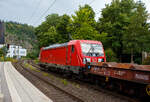
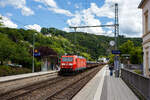
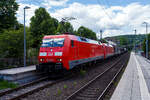
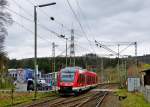
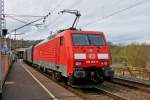
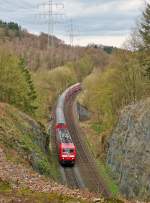
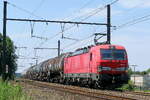
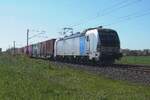
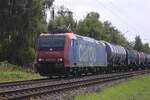
The 187 198-7 (91 80 6187 198-7 D-DB) of DB Cargo AG is running on July 16, 2026, with an empty open coil wagons (type Sahmms 711), through Kirchen (Sieg) towards Cologne.

Once again, a kind greeting back to the friendly locomotive driver.

The Bombardier TRAXX F140 AC3 was built in 2021 by Bombardier Transportation GmbH in Kassel under factory number 35745. The TRAXX F140 AC3 variants of DB Cargo AG (BR 187.1) do not have a last-mile device. The powerful locomotive (5,600 kW) has a top speed of 140 km/h. The locomotive is only authorized for Germany. The locomotives can be used in mixed multiple traction with BR185 and BR186.
The 187 198-7 (91 80 6187 198-7 D-DB) of DB Cargo AG is running on July 16, 2026, with an empty open coil wagons (type Sahmms 711), through Kirchen (Sieg) towards Cologne. Once again, a kind greeting back to the friendly locomotive driver. The Bombardier TRAXX F140 AC3 was built in 2021 by Bombardier Transportation GmbH in Kassel under factory number 35745. The TRAXX F140 AC3 variants of DB Cargo AG (BR 187.1) do not have a last-mile device. The powerful locomotive (5,600 kW) has a top speed of 140 km/h. The locomotive is only authorized for Germany. The locomotives can be used in mixed multiple traction with BR185 and BR186.
Armin Schwarz

The 187 198-7 (91 80 6187 198-7 D-DB) of DB Cargo AG is running on July 16, 2026, with an empty open coil wagons (type Sahmms 711), through Kirchen (Sieg) towards Cologne.

Once again, a kind greeting back to the friendly locomotive driver.

The Bombardier TRAXX F140 AC3 was built in 2021 by Bombardier Transportation GmbH in Kassel under factory number 35745. The TRAXX F140 AC3 variants of DB Cargo AG (BR 187.1) do not have a last-mile device. The powerful locomotive (5,600 kW) has a top speed of 140 km/h. The locomotive is only authorized for Germany. The locomotives can be used in mixed multiple traction with BR185 and BR186.
The 187 198-7 (91 80 6187 198-7 D-DB) of DB Cargo AG is running on July 16, 2026, with an empty open coil wagons (type Sahmms 711), through Kirchen (Sieg) towards Cologne. Once again, a kind greeting back to the friendly locomotive driver. The Bombardier TRAXX F140 AC3 was built in 2021 by Bombardier Transportation GmbH in Kassel under factory number 35745. The TRAXX F140 AC3 variants of DB Cargo AG (BR 187.1) do not have a last-mile device. The powerful locomotive (5,600 kW) has a top speed of 140 km/h. The locomotive is only authorized for Germany. The locomotives can be used in mixed multiple traction with BR185 and BR186.
Armin Schwarz

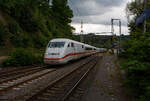
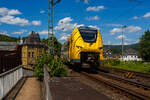
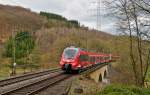
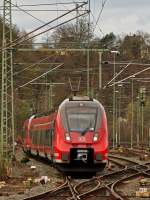
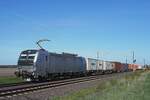
Uncommon on the Sieg route, the ICE 2, Tz 222  Eberswalde,  led by the power car 402 022-8, presumably running as an empty transfer train, passes through Scheuerfeld/Sieg towards Siegen on July 5, 2026.

The ICE 2, the second generation of high-speed trains in Germany, was put into service in 1996. Unlike the ICE 1, the ICE 2 is limited to six intermediate cars, one control car, and one power car.

A train consists of:
• Power car of class 402
• First-class car Apmz of class 805.3 as car 27 or 37
• First-class car Apmz of class 805.0 as car 26 or 36
• Onboard restaurant WRmbsz of class 807.0 as car 25 or 35
• Second-class service car Bpmbz of class 806.0 as car 24 / 34
• Second-class car Bpmz of class 806.3 as car 23 or 33
• Second-class car Bpmz of class 806.6 as car 22 or 32
• Second-class control car Bpmzf of class 808.0 as car 21 / 31
This train concept allows coupling two trains into a double train.

The ICE 2 follows the concept of double traction:
This enables flexible deployment – as double traction on routes with high demand and with half the seating capacity on routes with lower passenger volumes. The operational concept of the ICE 2 also considers  splitting  both train parts to different travel destinations, thus providing more direct connections without transfers. For example, two ICE 2 trains cover the route from Berlin to Hamm/Westphalia as a double train and then split there into two separate train services towards Essen/Düsseldorf and Hagen/Wuppertal, respectively.

Characteristic of the ICE 2 are the nose flaps on the power car and control car. They conceal the coupling to minimize air resistance during high-speed operation at up to 280 kilometers per hour. All ICE 2 trains underwent a comprehensive modernization starting in 2011, during which, among other things, the passenger information system was expanded to a total of six monitors per car and handrails were installed on the new seats.

TECHNICAL DATA:
Start of operation: 1996
Number of trains: 44
Track gauge: 1,435 mm (standard gauge)
Axle arrangement (power car): Bo’Bo’
Length over couplers (power car): 20,560 mm
Train length: 205.36 meters (power car, 6 intermediate cars, and control car)
Bogie wheelbase: 3,000 mm (power car) / 2,500 mm (cars)
Empty weight: 77.5 t (power car) and 412 t (7-car set incl. control car)
Maximum speed: 280 km/h
Continuous power output: 4,800 kW
Starting tractive effort: 200 kN
Wheel diameter: 920 mm (new) / 860 mm (worn)
Power system: 15 kV 16.7 Hz
Number of traction motors: 4
Drive: Cardan shaft
Brake system: KE R+E
Train protection system: Sifa, LZB 80/16 with PZB 90
Coupler type: Scharfenberg coupler
Seating capacity: 368 (pre-redesign) / 381 (post-redesign), comprising 106 First Class and 275 Second Class seats
Floor height: 1,226 mm above top of rail (TOR)
Uncommon on the Sieg route, the ICE 2, Tz 222 "Eberswalde," led by the power car 402 022-8, presumably running as an empty transfer train, passes through Scheuerfeld/Sieg towards Siegen on July 5, 2026. The ICE 2, the second generation of high-speed trains in Germany, was put into service in 1996. Unlike the ICE 1, the ICE 2 is limited to six intermediate cars, one control car, and one power car. A train consists of: • Power car of class 402 • First-class car Apmz of class 805.3 as car 27 or 37 • First-class car Apmz of class 805.0 as car 26 or 36 • Onboard restaurant WRmbsz of class 807.0 as car 25 or 35 • Second-class service car Bpmbz of class 806.0 as car 24 / 34 • Second-class car Bpmz of class 806.3 as car 23 or 33 • Second-class car Bpmz of class 806.6 as car 22 or 32 • Second-class control car Bpmzf of class 808.0 as car 21 / 31 This train concept allows coupling two trains into a double train. The ICE 2 follows the concept of double traction: This enables flexible deployment – as double traction on routes with high demand and with half the seating capacity on routes with lower passenger volumes. The operational concept of the ICE 2 also considers "splitting" both train parts to different travel destinations, thus providing more direct connections without transfers. For example, two ICE 2 trains cover the route from Berlin to Hamm/Westphalia as a double train and then split there into two separate train services towards Essen/Düsseldorf and Hagen/Wuppertal, respectively. Characteristic of the ICE 2 are the nose flaps on the power car and control car. They conceal the coupling to minimize air resistance during high-speed operation at up to 280 kilometers per hour. All ICE 2 trains underwent a comprehensive modernization starting in 2011, during which, among other things, the passenger information system was expanded to a total of six monitors per car and handrails were installed on the new seats. TECHNICAL DATA: Start of operation: 1996 Number of trains: 44 Track gauge: 1,435 mm (standard gauge) Axle arrangement (power car): Bo’Bo’ Length over couplers (power car): 20,560 mm Train length: 205.36 meters (power car, 6 intermediate cars, and control car) Bogie wheelbase: 3,000 mm (power car) / 2,500 mm (cars) Empty weight: 77.5 t (power car) and 412 t (7-car set incl. control car) Maximum speed: 280 km/h Continuous power output: 4,800 kW Starting tractive effort: 200 kN Wheel diameter: 920 mm (new) / 860 mm (worn) Power system: 15 kV 16.7 Hz Number of traction motors: 4 Drive: Cardan shaft Brake system: KE R+E Train protection system: Sifa, LZB 80/16 with PZB 90 Coupler type: Scharfenberg coupler Seating capacity: 368 (pre-redesign) / 381 (post-redesign), comprising 106 First Class and 275 Second Class seats Floor height: 1,226 mm above top of rail (TOR)
Armin Schwarz

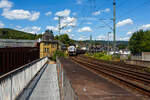
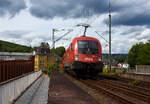
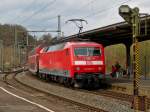
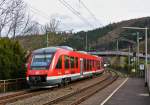
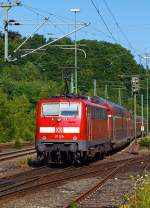
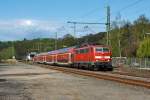
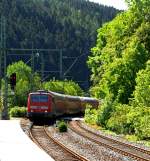
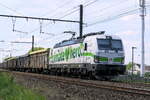
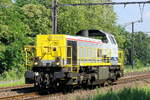
The 111 049-3 (91 80 6111 049-3 D-GfF) of GfF - Gesellschaft für Fahrzeugtechnik mbH (Crailsheim) is running on July 2, 2026, with an empty train consisting of two former InterRegio second-class coaches with multipurpose compartments (class Bimdz) through Kirchen/Sieg station towards Cologne. Once again, a warm greeting back to the friendly locomotive driver.

The locomotive was built in 1975 by Henschel in Kassel under factory number 31895 and delivered to Deutsche Bundesbahn. In the yellow/white livery (as shown here), the locomotive operated in 1990 and 1991 as the Lufthansa Airport Express on the LHA route Stuttgart–Frankfurt Airport. I think this color scheme suits the locomotive very well.
The 111 049-3 (91 80 6111 049-3 D-GfF) of GfF - Gesellschaft für Fahrzeugtechnik mbH (Crailsheim) is running on July 2, 2026, with an empty train consisting of two former InterRegio second-class coaches with multipurpose compartments (class Bimdz) through Kirchen/Sieg station towards Cologne. Once again, a warm greeting back to the friendly locomotive driver. The locomotive was built in 1975 by Henschel in Kassel under factory number 31895 and delivered to Deutsche Bundesbahn. In the yellow/white livery (as shown here), the locomotive operated in 1990 and 1991 as the Lufthansa Airport Express on the LHA route Stuttgart–Frankfurt Airport. I think this color scheme suits the locomotive very well.
Armin Schwarz