
rail-pictures.com
Rejestracja nie jest konieczna - zaloguj się kontem Google, Facebook lub X! Witaj gościu, nie jesteś zalogowany. Zaloguj się | Utwórz konto 
Forum   Kontakt   Impressum
angielski niemiecki francuski włoski hiszpański polski niderlandzki 

1874 Bilder
<<  poprzednia strona  34 35 36 37 38 39 40 41 42 43 n?chste Seite  >>
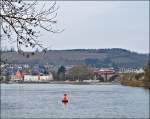
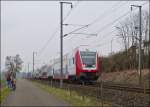
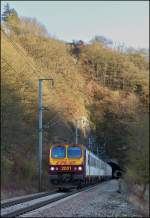
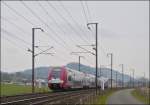
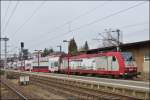
. A local train to Trier is running on the Sûre Bridge in Wasserbillig on April 8th, 2013.
. Pociąg lokalny do Trier jedzie po moście Sûre w Wasserbillig 8 kwietnia 2013 roku.
De Rond Hans und Jeanny

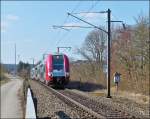
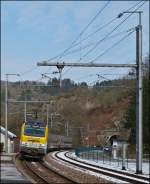
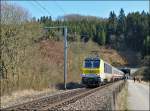
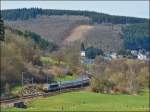
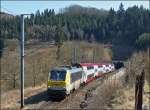
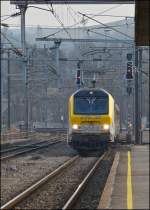
. 3003 is hauling SNCB I 10 cars through Lellingen on April 7th, 2013.
. 3003 ciągnie wagony SNCB I 10 przez Lellingen 7 kwietnia 2013 roku.
De Rond Hans und Jeanny

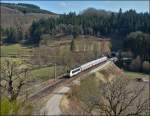
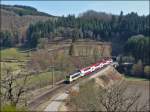
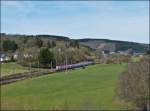
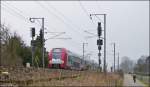
. The IR 3712 Luxembourg City - Troisvierges photographed in the nice landscape between Wilwerwiltz and Enscherange on April 14th, 2013.
IR 3712 Luxembourg City - Troisvierges sfotografowany w pięknym krajobrazie między Wilwerwiltz a Enscherange 14 kwietnia 2013 roku.
De Rond Hans und Jeanny

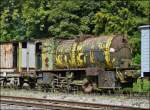
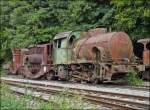
. Locomotive without boiler N° 123 with 2 axles, belonging to ARBED Differdange (formerly Hadir).  
Built in 1928 by  Meuse-Liège  under the number 3332. 
Power 285 hp, Weight: 38t.

Fond de Gras, September 13th, 2009.

The operating principle of the latter is a cylindrical tank mounted on a frame of steam locomotive and filled to about half of water is crossed by a stream of steam, about 10 bar pressure delivered by installation of steam fixed. At the end of this procedure of filling, the water in the tank of the locomotive took the temperature corresponding to the pressure of the steam introduced (ca. 200 ° C). The engine is disconnected from the filling station and can provide a traction advantage of heat energy in water embedded. As the locomotive rolls, water temperature and jointly vapor pressure led to the cylinder decreases. When a pressure of about 2 bar is reached, the locomotive must regain filling station and the cycle begins again.
Lokomotywa bez kotła nr 123 z 2 osiami, należąca do ARBED Differdange (dawniej Hadir). Wyprodukowana w 1928 roku przez "Meuse-Liège" pod numerem 3332. Moc 285 KM, Waga: 38 t. Fond de Gras, 13 września 2009. Zasada działania tej lokomotywy polega na cylindrycznym zbiorniku zamontowanym na ramie lokomotywy parowej, wypełnionym do około połowy wodą, przez który przepływa strumień pary o ciśnieniu około 10 barów dostarczany przez stacjonarną instalację parową. Po zakończeniu tego procesu napełniania, woda w zbiorniku lokomotywy osiąga temperaturę odpowiadającą ciśnieniu wprowadzonej pary (ok. 200 °C). Silnik jest odłączany od stacji napełniania i może zapewnić siłę trakcyjną dzięki energii cieplnej zgromadzonej w wodzie. W miarę jazdy lokomotywy temperatura wody i ciśnienie pary w cylindrze stopniowo spadają. Gdy ciśnienie osiąga około 2 bary, lokomotywa musi wrócić do stacji napełniania i cykl zaczyna się od nowa.
De Rond Hans und Jeanny

Luksemburg / Zabytkowe Koleje i Muzea / Pociąg 1900

757 1024x755 Px, 16.04.2013

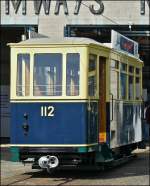
. The trailer N° 112 (formerly motor coach N° 12) photographed in the Tramway and Bus Museum of the City of Luxembourg in Hollerich on April 27th, 2008.
. Przyczepa nr 112 (dawniej wagon silnikowy nr 12) sfotografowana w Muzeum Tramwajów i Autobusów Miasta Luksemburga w Hollerich 27 kwietnia 2008 roku.
De Rond Hans und Jeanny

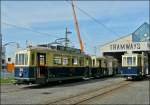
. The motor coach N° 26 from 1938 and the trailer N° 121 pictured in the Tramway and Bus Museum of the City of Luxembourg in Hollerich on April 27th, 2008. 

The motor coach N° 26 and the trailer N° 121 were built in the service's workshops at Limpertsberg (Luxembourg). The construction of whole tramways was decided on during the 1920's and 1930's: on one hand, to reduce unemployment, which was quite significant at the time and, on the other, to reduce the communal budget deficit. When the tramway system was dismantled in Luxembourg, this motor coach and trailer were made available to the tramway museum de Schepdaal in Brussels due to a lack of space, while they were waiting to be brought back to Luxembourg again.
Autobus silnikowy nr 26 z 1938 roku oraz doczepka nr 121 przedstawione w Muzeum Tramwajów i Autobusów Miasta Luksemburga w Hollerich 27 kwietnia 2008 roku. Autobus silnikowy nr 26 oraz doczepka nr 121 zostały wyprodukowane w warsztatach służby w Limpertsberg (Luksemburg). Budowa całych tramwajów została podjęta w latach 20. i 30. XX wieku: z jednej strony, aby zmniejszyć bezrobocie, które było wtedy dość znaczące, a z drugiej, aby zredukować deficyt budżetu komunalnego. Gdy system tramwajowy w Luksemburgu został zlikwidowany, ten autobus silnikowy i doczepka zostały udostępnione muzeum tramwajowemu de Schepdaal w Brukseli z powodu braku miejsca, oczekując na ponowny transport do Luksemburga.
De Rond Hans und Jeanny

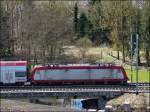
. The CFL Cargo 318 taken in Esch Belval on March 4th, 2013.
. CFL Cargo 318 sfotografowany w Esch Belval 4 marca 2013 roku.
De Rond Hans und Jeanny

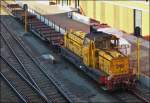
. Locomotive without boiler N° V 12 with 3 axles, belonging to ARBED Dudelange. Built in 1956 by Jung-Kirchen Jungenthal/Sieg under the number 12513. 
Type designation by the manufacturer:  Felix . 
Power 250 hp, weight 39t.

Fond de Gras, September 13th, 2009.

The advantage of this type of locomotive it is very simple and robust, the most complicated of a normal locomotive (with boiler) is the boiler. It was so cheap to acquire and in maintenance. His conduct is easy and does not require highly skilled personnel. The exhaust of the locomotive is composed of only water vapor, gas combustion and smoke. It can therefore operate safely in areas covered and within the halls of manufacture. The disadvantage is of course to have a limited range and require a distribution network Steam. The latter was not available for all kinds of applications in the steel mills.
Lokomotywa bez kotła nr V 12 z 3 osiami, należąca do ARBED Dudelange. Wyprodukowana w 1956 roku przez Jung-Kirchen Jungenthal/Sieg pod numerem 12513. Oznaczenie typu przez producenta: "Felix". Moc 250 KM, masa 39 t. Fond de Gras, 13 września 2009. Zaletą tego typu lokomotywy jest jej prostota i wytrzymałość, najtrudniejszym elementem normalnej lokomotywy (z kotłem) jest kocioł. Była więc tania w zakupie i w utrzymaniu. Jej obsługa jest łatwa i nie wymaga wysoko wykwalifikowanego personelu. Spaliny lokomotywy składają się wyłącznie z pary wodnej, gazów spalania i dymu. Może więc bezpiecznie pracować w pomieszczeniach zamkniętych i halach produkcyjnych. Wadą jest oczywiście ograniczony zasięg i konieczność posiadania sieci dystrybucji pary. Taka sieć nie była dostępna dla wszystkich zastosowań w hutach stali.
De Rond Hans und Jeanny

Luksemburg / Zabytkowe Koleje i Muzea / Pociąg 1900

1004 1024x755 Px, 16.04.2013

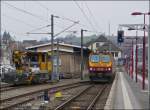
. Z 2013 and Robel 704 pictured together in Wasserbillig on April 8th, 2013.
. Z 2013 i Robel 704 sfotografowane razem w Wasserbillig 8 kwietnia 2013 roku.
De Rond Hans und Jeanny

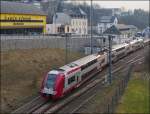
. 4010 is entering with bilevel cars into the station of Wasserbililg on April 8th, 2013.
. 4010 wjeżdża z wagonami piętrowymi na stację Wasserbillig 8 kwietnia 2013 roku.
De Rond Hans und Jeanny

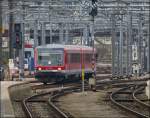
. The CFL 628 506 photographed in Luxembourg City on April 8th, 2013.
. CFL 628 506 sfotografowany w Luksemburgu 8 kwietnia 2013 roku.
De Rond Hans und Jeanny

Luksemburg / Spalinowe zespoły trakcyjne / 628/928

785 1024x811 Px, 21.04.2013

<<  poprzednia strona  34 35 36 37 38 39 40 41 42 43 n?chste Seite  >>


Statistik
 
Diese Webseite verwendet Cookies, um Inhalte und Anzeigen zu personalisieren und Zugriffe zu analysieren. Sie können zwischen personalisierter und nicht-personalisierter Werbung wählen.
Mit der Nutzung dieser Seite stimmen Sie der Verwendung von Cookies zu.