
rail-pictures.com
Nessuna registrazione necessaria - accedi con account Google, Facebook o X! Ciao ospite, non hai effettuato l'accesso. Accedi | Crea account 
Forum   Contatto   Note legali
inglese tedesco francese italiano spagnolo polacco olandese 

1874 Bilder
<<  pagina precedente  34 35 36 37 38 39 40 41 42 43 n?chste Seite  >>
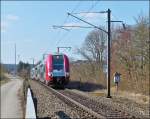
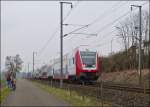
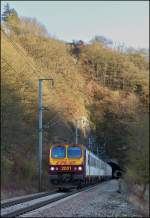
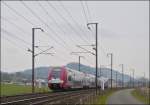
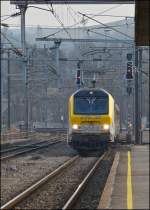
. Z 2204 is running between Lintgen and Mersch on April 8th, 2013.
. Il treno Z 2204 sta viaggiando tra Lintgen e Mersch l'8 aprile 2013.
De Rond Hans und Jeanny

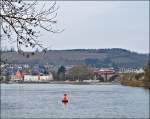
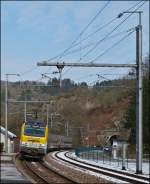
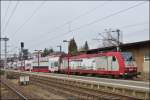
. A local train to Trier is running on the Sûre Bridge in Wasserbillig on April 8th, 2013.
Un treno regionale per Treviri sta transitando sul ponte della Sûre a Wasserbillig l'8 aprile 2013.
De Rond Hans und Jeanny

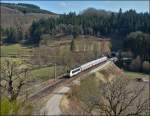
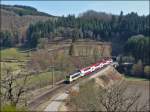
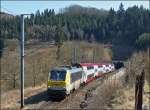
. 3003 is hauling SNCB I 10 cars through Lellingen on April 7th, 2013.
La 3003 sta trainando carrozze SNCB I 10 attraverso Lellingen il 7 aprile 2013.
De Rond Hans und Jeanny

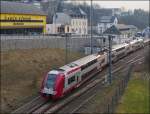
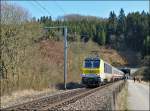
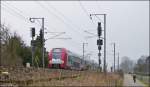
. Z 2211 is running between Lintgen and Mersch on April 8th, 2013.
. Z 2211 sta viaggiando tra Lintgen e Mersch l'8 aprile 2013.
De Rond Hans und Jeanny

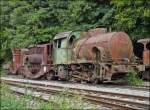
. Locomotive without boiler N° 123 with 2 axles, belonging to ARBED Differdange (formerly Hadir).  
Built in 1928 by  Meuse-Liège  under the number 3332. 
Power 285 hp, Weight: 38t.

Fond de Gras, September 13th, 2009.

The operating principle of the latter is a cylindrical tank mounted on a frame of steam locomotive and filled to about half of water is crossed by a stream of steam, about 10 bar pressure delivered by installation of steam fixed. At the end of this procedure of filling, the water in the tank of the locomotive took the temperature corresponding to the pressure of the steam introduced (ca. 200 ° C). The engine is disconnected from the filling station and can provide a traction advantage of heat energy in water embedded. As the locomotive rolls, water temperature and jointly vapor pressure led to the cylinder decreases. When a pressure of about 2 bar is reached, the locomotive must regain filling station and the cycle begins again.
Locomotiva senza caldaia N° 123 con 2 assi, appartenente ad ARBED Differdange (ex Hadir). Costruita nel 1928 dalla "Meuse-Liège" con il numero 3332. Potenza 285 CV, Peso: 38t. Fond de Gras, 13 settembre 2009. Il principio di funzionamento di quest'ultima è un serbatoio cilindrico montato su un telaio di locomotiva a vapore e riempito per circa metà di acqua, attraversato da un flusso di vapore, a circa 10 bar di pressione fornita dall'impianto di vapore fisso. Al termine di questa procedura di riempimento, l'acqua nel serbatoio della locomotiva raggiunge la temperatura corrispondente alla pressione del vapore introdotto (circa 200 °C). Il motore viene scollegato dalla stazione di rifornimento e può fornire una trazione sfruttando l'energia termica immagazzinata nell'acqua. Man mano che la locomotiva si muove, la temperatura dell'acqua e la pressione del vapore nel cilindro diminuiscono congiuntamente. Quando si raggiunge una pressione di circa 2 bar, la locomotiva deve tornare alla stazione di rifornimento e il ciclo ricomincia.
De Rond Hans und Jeanny

Luxemburg / Ferrovie storiche e musei / Treno 1900

757 1024x755 Px, 16.04.2013

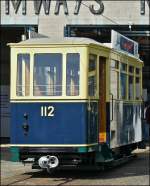
. The trailer N° 112 (formerly motor coach N° 12) photographed in the Tramway and Bus Museum of the City of Luxembourg in Hollerich on April 27th, 2008.
Il rimorchio N° 112 (ex automotrice N° 12) fotografato nel Museo del Tram e degli Autobus della Città di Lussemburgo a Hollerich il 27 aprile 2008.
De Rond Hans und Jeanny

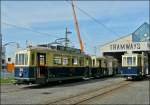
. The motor coach N° 26 from 1938 and the trailer N° 121 pictured in the Tramway and Bus Museum of the City of Luxembourg in Hollerich on April 27th, 2008. 

The motor coach N° 26 and the trailer N° 121 were built in the service's workshops at Limpertsberg (Luxembourg). The construction of whole tramways was decided on during the 1920's and 1930's: on one hand, to reduce unemployment, which was quite significant at the time and, on the other, to reduce the communal budget deficit. When the tramway system was dismantled in Luxembourg, this motor coach and trailer were made available to the tramway museum de Schepdaal in Brussels due to a lack of space, while they were waiting to be brought back to Luxembourg again.
Il motrice N° 26 del 1938 e il rimorchio N° 121 fotografati nel Museo del Tram e degli Autobus della Città di Lussemburgo a Hollerich il 27 aprile 2008. La motrice N° 26 e il rimorchio N° 121 furono costruiti nelle officine del servizio a Limpertsberg (Lussemburgo). La costruzione di intere linee tranviarie fu decisa negli anni '20 e '30: da un lato, per ridurre la disoccupazione, che all'epoca era piuttosto significativa, e dall'altro, per ridurre il deficit del bilancio comunale. Quando il sistema tranviario fu smantellato a Lussemburgo, questa motrice e il rimorchio furono messi a disposizione del museo tranviario di Schepdaal a Bruxelles a causa della mancanza di spazio, in attesa di essere riportati nuovamente a Lussemburgo.
De Rond Hans und Jeanny

. The CFL Cargo 318 taken in Esch Belval on March 4th, 2013.
. Il CFL Cargo 318 fotografato a Esch Belval il 4 marzo 2013.
De Rond Hans und Jeanny

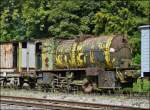
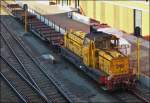
. Locomotive without boiler N° V 12 with 3 axles, belonging to ARBED Dudelange. Built in 1956 by Jung-Kirchen Jungenthal/Sieg under the number 12513. 
Type designation by the manufacturer:  Felix . 
Power 250 hp, weight 39t.

Fond de Gras, September 13th, 2009.

The advantage of this type of locomotive it is very simple and robust, the most complicated of a normal locomotive (with boiler) is the boiler. It was so cheap to acquire and in maintenance. His conduct is easy and does not require highly skilled personnel. The exhaust of the locomotive is composed of only water vapor, gas combustion and smoke. It can therefore operate safely in areas covered and within the halls of manufacture. The disadvantage is of course to have a limited range and require a distribution network Steam. The latter was not available for all kinds of applications in the steel mills.
Locomotiva senza caldaia N° V 12 con 3 assi, appartenente ad ARBED Dudelange. Costruita nel 1956 da Jung-Kirchen Jungenthal/Sieg con il numero 12513. Denominazione del tipo da parte del produttore: "Felix". Potenza 250 CV, peso 39t. Fond de Gras, 13 settembre 2009. Il vantaggio di questo tipo di locomotiva è che è molto semplice e robusta, la parte più complicata di una locomotiva normale (con caldaia) è la caldaia stessa. Era quindi economica da acquistare e da mantenere. La sua conduzione è facile e non richiede personale altamente qualificato. Lo scarico della locomotiva è composto solo da vapore acqueo, gas di combustione e fumo. Può quindi operare in sicurezza in aree coperte e all’interno dei capannoni di produzione. Lo svantaggio è ovviamente avere un’autonomia limitata e richiedere una rete di distribuzione del vapore. Quest’ultima non era disponibile per tutti i tipi di applicazioni negli stabilimenti siderurgici.
De Rond Hans und Jeanny

Luxemburg / Ferrovie storiche e musei / Treno 1900

1004 1024x755 Px, 16.04.2013

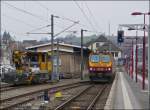
. Z 2013 and Robel 704 pictured together in Wasserbillig on April 8th, 2013.
. Z 2013 e Robel 704 fotografati insieme a Wasserbillig l'8 aprile 2013.
De Rond Hans und Jeanny

. 4010 is entering with bilevel cars into the station of Wasserbililg on April 8th, 2013.
Il 4010 sta entrando con carrozze a due piani nella stazione di Wasserbillig l'8 aprile 2013.
De Rond Hans und Jeanny

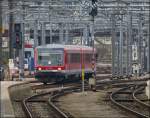
. The CFL 628 506 photographed in Luxembourg City on April 8th, 2013.
. La CFL 628 506 fotografata a Lussemburgo città l'8 aprile 2013.
De Rond Hans und Jeanny

Luxemburg / Automotrici diesel / 628/928

785 1024x811 Px, 21.04.2013

<<  pagina precedente  34 35 36 37 38 39 40 41 42 43 n?chste Seite  >>


Statistik
 
Diese Webseite verwendet Cookies, um Inhalte und Anzeigen zu personalisieren und Zugriffe zu analysieren. Sie können zwischen personalisierter und nicht-personalisierter Werbung wählen.
Mit der Nutzung dieser Seite stimmen Sie der Verwendung von Cookies zu.