
rail-pictures.com
Ingen registrering krävs - logga in med Google-, Facebook- eller X-konto! Hej gäst, du är inte inloggad. Logga in | Skapa konto 
Forum   Kontakt   Impressum
engelska tyska franska italienska spanska polska nederländska japanisch svenska 

Nya Bilder

40277 Bilder
<<  föregående sida  1155 1156 1157 1158 1159 1160 1161 1162 1163 1164 nästa sida  >>
SSIF  Treno Panoramico  på väg till Domodossola i Santa Maria Maggiore. 05.08.2014
SSIF "Treno Panoramico" på väg till Domodossola i Santa Maria Maggiore. 05.08.2014
Stefan Wohlfahrt

SSIF ABe 6/6 34  Piemonte  i Santa Maria Maggiore.  
05.08.20014
SSIF ABe 6/6 34 "Piemonte" i Santa Maria Maggiore. 05.08.20014
Stefan Wohlfahrt

SSIF ABe 6/6 34  Piemonte  i Santa Maria Maggiore. 05.08.20014
SSIF ABe 6/6 34 "Piemonte" i Santa Maria Maggiore. 05.08.20014
Stefan Wohlfahrt

SSIF ABe 6/6 34  Piemonte  i Verigo.  
05.08.20014
SSIF ABe 6/6 34 "Piemonte" i Verigo. 05.08.20014
Stefan Wohlfahrt

SBB ETR 610 from Geneva to Milan is arriving at Domodossola. 
05.08.2014
SBB ETR 610 from Geneva to Milan is arriving at Domodossola. 05.08.2014
Stefan Wohlfahrt

Schweiz / Elektriska multipelenheter / ETR 610

645 1200x801 Px, 08.08.2014

Multiple units 711-007 run through Cirkovce-Polje on the way to Murska Sobota. /29.7.2014
Franci Vuk

Slovenien / Dieseldrivna motorvagnar / 711

620 1200x742 Px, 07.08.2014

Electric loc 342-001 pull passenger train through Maribor-Tabor on the way to Maribor station. /24.7.2014
Franci Vuk

Slovenien / Elektriska lokomotiv / 342

573 1200x742 Px, 07.08.2014

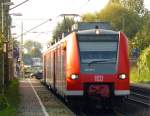
Motorvagnar 310-? passerar Maribor-Tabor på väg till Maribor station. /26.7.2014
Franci Vuk

Slovenien / Elektriska motorvagnar / 310

657 1200x742 Px, 06.08.2014

Elektrisk lok 363-019 drar godståg genom Maribor-Tabor på väg norrut. /18.7.2014
Franci Vuk

Slovenien / Elektriska lokomotiv / 363

568 1200x742 Px, 06.08.2014

Motorvagnar 715-104 passerar Cirkovce-Polje på väg mot Maribor. /29.7.2014
Franci Vuk

Slovenien / Dieseldrivna motorvagnar / 713

639 1200x742 Px, 05.08.2014

Electric loc 342-025 pull EC158 'Croatia' through Maribor-Tabor on the way to Vienna. /18.7.2014
Franci Vuk

Slovenien / Elektriska lokomotiv / 342

634 1200x742 Px, 05.08.2014

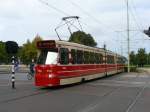
Série 3000 dubbelkopplad dragvagn fotograferad nära Mersch den 1 augusti 2014.
De Rond Hans und Jeanny

. 3020 skjuter IR 3745 Troisvierges - Luxemburg stad genom Berschbach/Mersch på kvällen den 1 augusti 2014.
De Rond Hans und Jeanny

Diesellok 642-199 drar passagerartåg genom Maribor-Tabor på väg till Ptuj. /18.7.2014
Franci Vuk

Slovenien / Diesellok / Diverse

666 1200x742 Px, 04.08.2014

Elektriskt lok 363-026 drar godståg genom Maribor-Tabor på väg norrut. /18.7.2014
Franci Vuk

Slovenien / Elektriska lokomotiv / 363

601 1200x742 Px, 04.08.2014

Liepāja, Latvia's third biggest town, situated in Lower Courland 220 km from Riga on the Baltic coast, is the industrial city with an ice-free harbour and a huge metallurgical complex (Liepājas Metalurgs). The second half of the 19th century saw the rapid expansion of industry and industrial related activities. Having direct railway connection with the fertile parts of southern and south-eastern Russia, Liepāja (Libau, Lipawa) has become the modern port for foreign trade on the Baltic specialized in exporting Russian grain. Before WWI Liepāja was also the biggest Russian emigration port. It had a regular transatlantic shipping service to New York and Halifax, between 1906 and 1913 ca. 330,000 emigrants from Eastern Europe passed through the city on their way to the New World and to the New Life. As a result of this prosperity, the Liepāja's population, which was only 9,970 in 1863, increased to 64,489 in 1897 and to over 100,000 in 1914 (more than today). Yet in 1863, nearly 80% of the inhabitants were Germans, 16% Latvians and 3% Russians. Destroyed during WWII and then rebuilt, Liepāja was in the Soviet period a completely closed city, Westerners were not allowed to come here and even nearby villagers needed a special permit to enter it. With the area of 60 sq km, Liepāja is sandwiched between coastal Lake of Liepāja (Liepājas ezers) and the Baltic Sea. The city can be divided into two parts: New Liepāja (Jaunliepāja) and Old Liepāja (Vecliepāja) which are separated with the navigable Trade Canal (Tirdzniecības kanāls) flowing from the Lake of Liepāja to the sea. The bus and railway stations are together right at the end of Jaunliepāja, north of the city centre, about 20 minutes' walk from the Tram Bridge (Tramvaja tilts). Description & Photo: Summer 1999.
Jarosław Swajdo

Lettland / Stationer / Diverse

1004 1024x559 Px, 04.08.2014

In the 17th century, the town of Ventspils (Windau, Windawa) was known as a shipbuilding center of the Duchy of Courland, a small semi-independent state in the Baltic region that established its colonies Gambia in West Africa and Tobago in Caribbean, and even laid plans to colonise Australia. Today, Ventspils (44, 000) is an industrial town and Latvia's busiest seaport. The partly wooden building of the train station is located 2 km east from the city center, across the Venta river. Description & Photo: Summer 1999.
Jarosław Swajdo

Lettland / Stationer / Diverse

1358  2 1024x584 Px, 04.08.2014

Flervagnsenheter 312-103 passerar Maribor-Tabor på väg mot Dobova. /18.7.2014
Franci Vuk

Slovenien / Elektriska motorvagnar / 312 Desiro

617 1200x742 Px, 03.08.2014

Electric loc 342-005 pull freight train through Maribor-Tabor on the way to Koper port. /18.7.2014
Franci Vuk

Slovenien / Elektriska lokomotiv / 342

629 1200x742 Px, 03.08.2014

Ett MGB lokaltåg nära Täsch.  
19.10.2012
Ett MGB lokaltåg nära Täsch. 19.10.2012
Stefan Wohlfahrt

Schweiz / Matterhorn-Gotthard-Bahn (MGB) / Diverse

617 1200x805 Px, 03.08.2014

Ett MGB lokaltåg vid Täsch.  
19.10.2012
Ett MGB lokaltåg vid Täsch. 19.10.2012
Stefan Wohlfahrt

Schweiz / Matterhorn-Gotthard-Bahn (MGB) / Diverse

643 1200x795 Px, 03.08.2014

<<  föregående sida  1155 1156 1157 1158 1159 1160 1161 1162 1163 1164 nästa sida  >>


Statistik
 
Diese Webseite verwendet Cookies, um Inhalte und Anzeigen zu personalisieren und Zugriffe zu analysieren. Sie können zwischen personalisierter und nicht-personalisierter Werbung wählen.
Mit der Nutzung dieser Seite stimmen Sie der Verwendung von Cookies zu.